Pathogen. This fungus persists in the soil for many years as tiny propagules called microsclerotia. Short crop rotations, especially in sandy soils with susceptible varieties, tend to increase the population of Verticillium to damaging levels. The fungus infects many other crops and weed species. High soil temperatures (22–27°C) favour the growth of this fungus.
Disease development. Microsclerotia of Verticillium germinate, and the fungus penetrates the plants through the roots. Once inside the plant, the fungus plugs the vascular tissue.
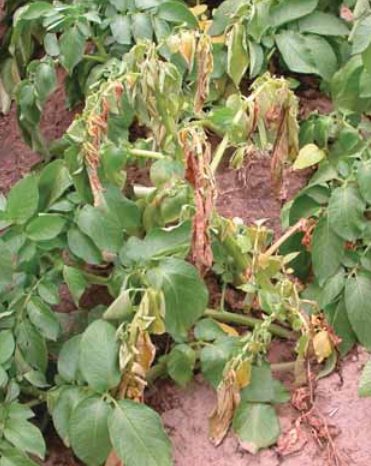
症状。最初の症状は通常、8 月初旬に植物の下部に現れます。葉脈間の部分が黄色くなり始めます。その後、症状は若い葉の上方に移動します。葉の黄変に続いて、褐色化と壊死が起こります。病気の初期段階では、同じ植物のすべての茎に症状が現れるわけではありません。
感染した植物は日中は萎れてしまいますが、夜には回復します。作物は成熟する 3 ~ 4 週間前に早く老化します。その結果、塊茎は大きくならず、深刻な収量損失が発生します。この病気は、主に熱、干ばつ、栄養不足、虫害によって引き起こされる作物のストレスによって発生しやすくなります。
The premature vine death and declining yields caused by Verticillium are called “potato early dying syndrome.” The root lesion nematode has been associated with this syndrome because it enhances the incidence and severity of Verticillium 欲しいです。
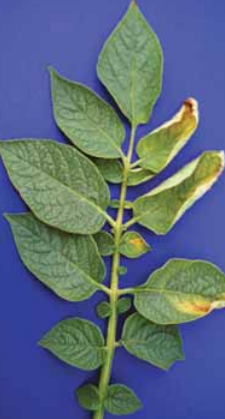
若い葉も黄色くなります。
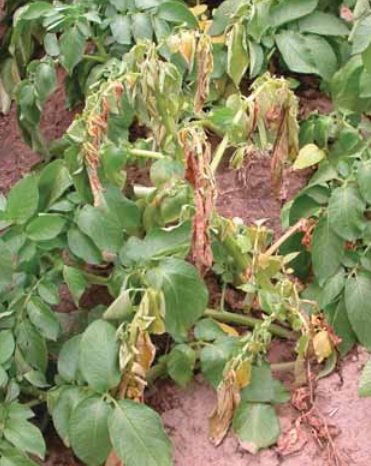
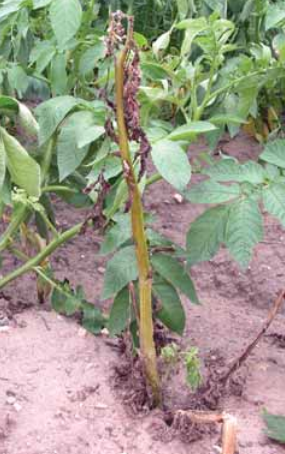
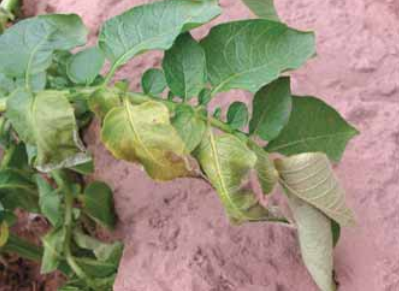
葉が黄色くなり、枯れてしまいます。
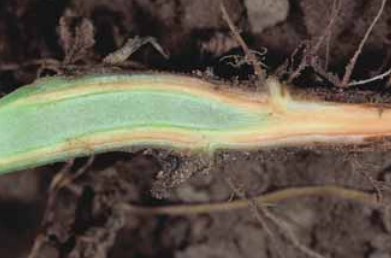
茎の「木質組織」。この症状は
茎を地面近くで切ると簡単に見える
長く斜めにカットした平らな部分。
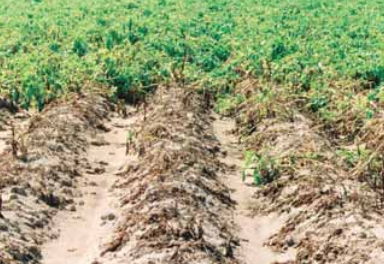
に夢中 Verticillium and the root lesion
線虫。
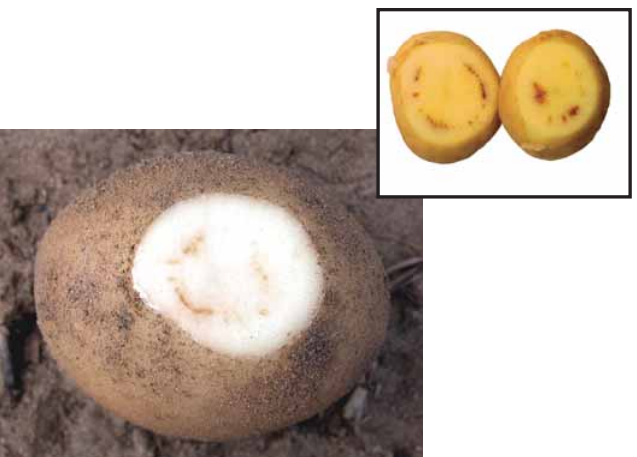
塊茎。変色は通常半分以上は広がりません。
塊茎を通して。